 Back
BackExploring the History of Thai Cuisine in Bangkok
Experience the bustling flavors of Bangkok's culinary scene.
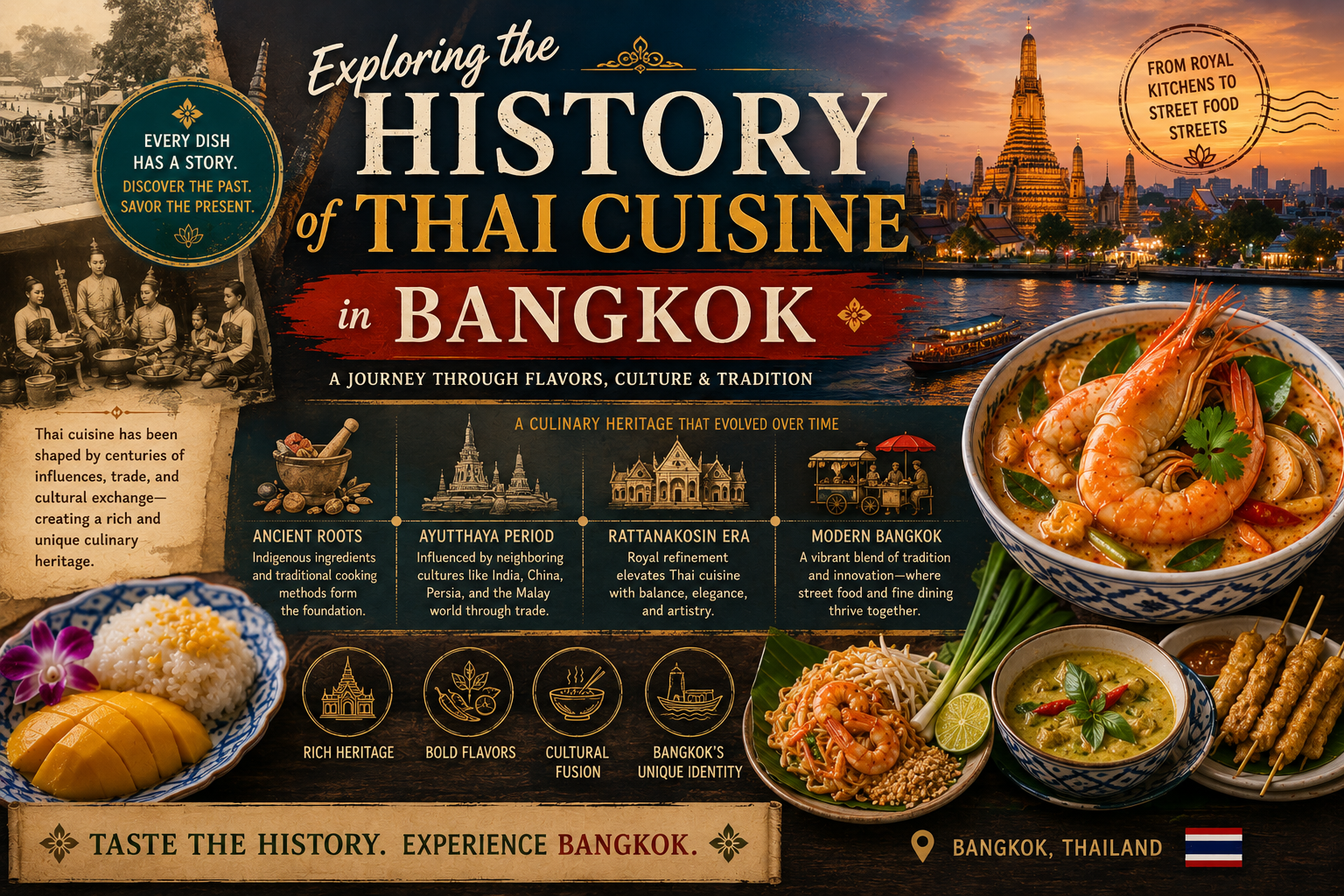
Thai cuisine in Bangkok has a rich history influenced by royal traditions, local ingredients, and cultural exchanges. Understanding this history enhances your culinary experience in the city.
Why It Matters
For travelers, exploring the history of Thai cuisine in Bangkok is essential for appreciating the flavors and techniques that define the food. Each dish tells a story of cultural influences, local ingredients, and the evolution of cooking methods that have shaped modern Thai food.
Detailed Explanation
The Origins of Thai Cuisine
The roots of Thai cuisine can be traced back centuries, with influences from neighboring countries such as China, India, and Malaysia. The migration of various ethnic groups into Thailand contributed to the diversity of flavors and techniques. Early Thai meals were heavily reliant on rice, which remains a staple today.
Royal Influence on Thai Dishes
During the Ayutthaya and Rattanakosin periods, royal cuisine began to flourish. Dishes were meticulously prepared and presented, emphasizing balance and harmony in flavors. Ingredients like coconut milk, herbs, and spices were used to create complex flavors. Many royal dishes, such as tom yum kung (spicy shrimp soup) and gaeng phed (red curry), are now integral to Bangkok's street food scene.
The Rise of Street Food Culture
In contrast to royal cuisine, street food emerged as a way for locals to enjoy affordable, delicious meals. By the late 20th century, Bangkok became famous for its bustling street food markets, where vendors serve everything from pad thai to som tam (green papaya salad). This food culture showcases the accessibility and creativity of Thai cooking, making it a must-try for travelers.
Modern Influences and Globalization
In recent years, globalization has further shaped Thai cuisine. International ingredients and culinary techniques have found their way into traditional recipes, creating a fusion of flavors. Bangkok’s vibrant food scene reflects this evolution, with a mix of street food stalls and high-end restaurants offering innovative takes on classic dishes.
Experiencing Thai Cuisine Today
Travelers can immerse themselves in the history of Thai cuisine by exploring local markets, participating in cooking classes, and dining at various establishments that reflect the rich tapestry of influences. Each meal serves as a delicious entry point into Thailand's cultural and historical narrative.