 Back
BackWhat is Tom Yum Goong? A Deep Dive into Thailand's Iconic Spicy Shrimp Soup
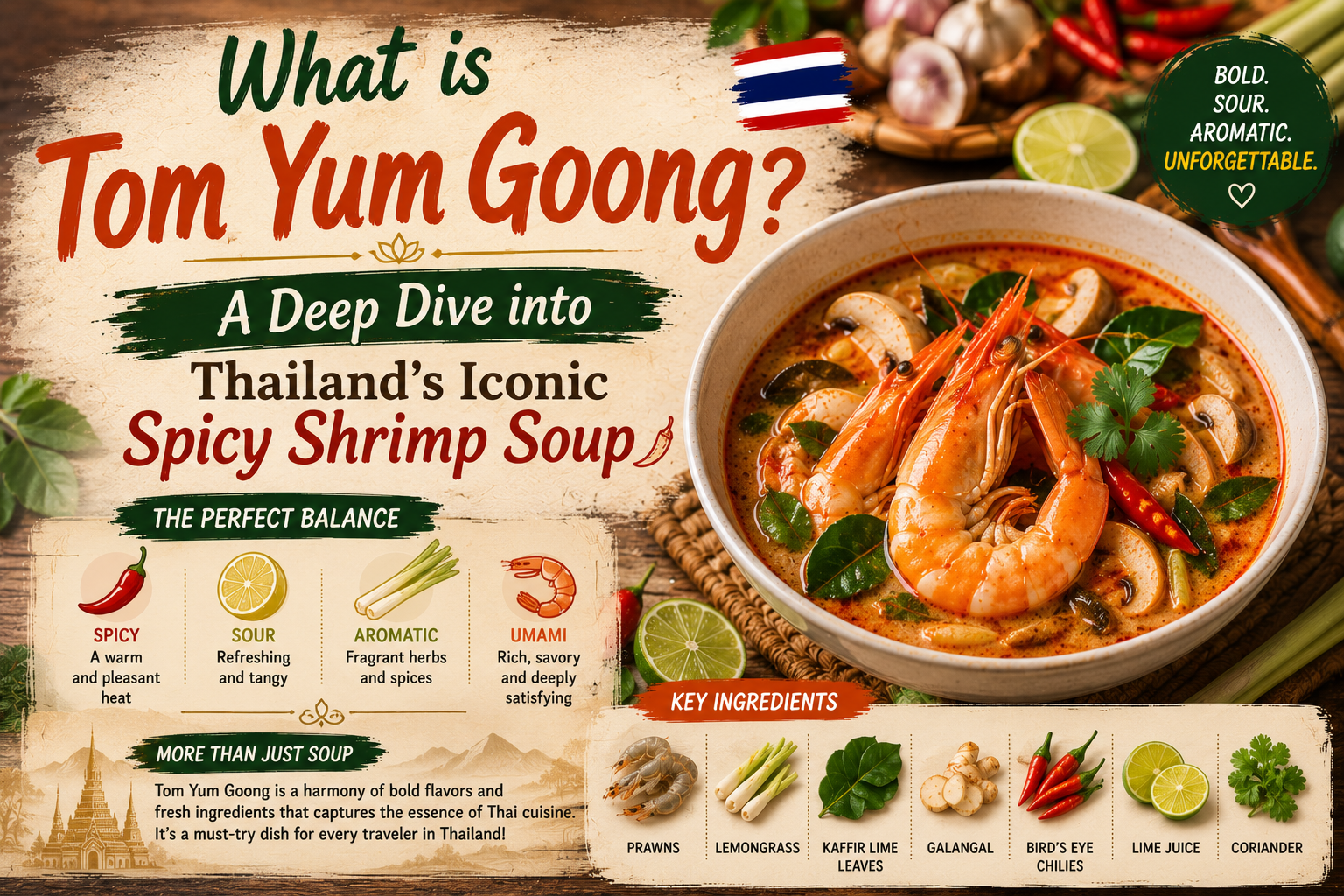
A steaming bowl of Tom Yum Goong, a must-try dish in Thailand's culinary landscape.
Tom Yum Goong is a famous Thai soup characterized by its bold and spicy flavors, primarily featuring shrimp, lemongrass, kaffir lime leaves, and chili. It's a staple in Thai cuisine, loved by locals and visitors alike.
Why It Matters
For travelers visiting Thailand, experiencing authentic local cuisine is essential. Tom Yum Goong not only tantalizes your taste buds but also embodies the rich culinary culture of the country. Sampling this iconic dish provides insight into the balance of flavors that Thai food is celebrated for, making it a memorable part of your journey.
Detailed Explanation
The Origins of Tom Yum Goong
Tom Yum Goong, often referred to simply as Tom Yum, has roots that date back to centuries ago in Thailand, particularly in the central region. The word "Tom" means to boil, while "Yum" refers to the mixture of flavors. The dish was originally created as a way to utilize fresh ingredients and seafood, with shrimp being a common catch in Thai waters.
Main Ingredients
The signature flavor of Tom Yum Goong comes from its aromatic ingredients:
- Shrimp: The star ingredient, often used fresh or even grilled for added depth.
- Lemongrass: Adds a citrusy aroma and flavor.
- Kaffir Lime Leaves: Provides a unique fragrance that enhances the soup.
- Chili Peppers: Gives the dish its signature spiciness.
- Fish Sauce: Adds saltiness and umami.
- Lime Juice: Balances the dish with acidity.
How to Enjoy Tom Yum Goong
When you order Tom Yum Goong in Thailand, it often comes served in a hot pot, allowing you to enjoy it fresh and bubbling. It's typically enjoyed with rice or vermicelli noodles, making it a hearty yet refreshing meal. Many restaurants also offer variations, such as Tom Yum with chicken or mixed seafood, catering to different tastes.
The Cultural Significance
Tom Yum Goong is not just a dish; it's a cultural symbol for many Thai people. It's commonly served during family gatherings and celebrations, signifying hospitality and warmth. By sharing a bowl of Tom Yum Goong, you're also sharing a piece of Thai culture.
Related Reading
For more insights into the rich world of Thai cuisine, check out our related articles that delve into other iconic dishes and culinary traditions.