 Back
BackCultural Etiquette in Chiang Mai: Dos and Don'ts for Travelers
Discover the cultural richness of Chiang Mai through its sacred sites and warm hospitality.
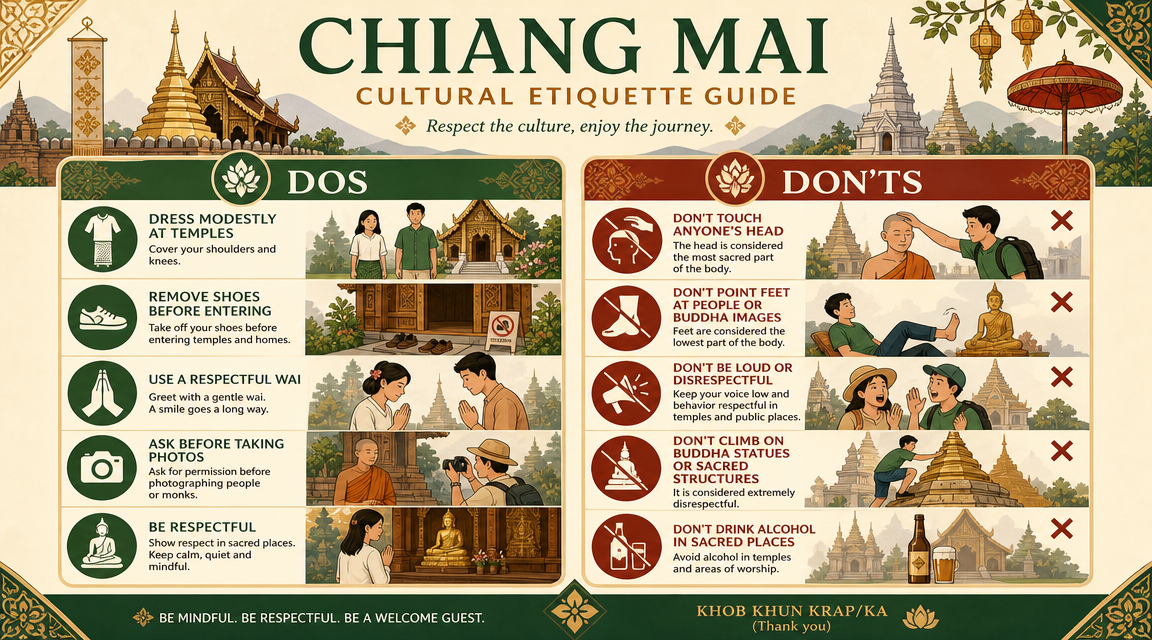
When visiting Chiang Mai, respect local customs by dressing modestly, greeting with a smile, and being mindful of sacred spaces. Avoid pointing your feet and raising your voice in public.
Why It Matters
Cultural etiquette is crucial for fostering positive interactions between travelers and locals. Understanding and respecting these customs can lead to a more enriching experience while helping to preserve the local culture. By being mindful of your behavior, you not only enhance your trip but also show appreciation for the rich traditions of Chiang Mai.
Detailed Explanation
Dressing Modestly
In Chiang Mai, modesty is valued. Visitors should wear clothing that covers shoulders and knees, especially when visiting temples. Light, breathable fabrics are ideal for the tropical climate, but ensure they adhere to local customs. This shows respect for the culture and the sacredness of religious sites.
Greetings and Interactions
Thai people are known for their warm hospitality. A genuine smile and a traditional "wai" (a slight bow with palms pressed together) can go a long way in establishing rapport. Always greet locals with respect, and be polite in your interactions. Avoid interrupting others or speaking loudly, as this can be seen as rude.
Respecting Sacred Spaces
Chiang Mai is filled with beautiful temples, and visitors are encouraged to explore them. However, it’s essential to be aware of the rules, such as removing your shoes before entering, not taking photos in restricted areas, and maintaining a respectful demeanor. These practices show reverence for the spiritual significance of these places.
Mind Your Feet
In Thai culture, feet are considered the lowest part of the body and should not be pointed at people or religious objects. When sitting, try to keep your feet flat on the ground or crossed. Always use your hands to touch items, especially sacred ones, never your feet.
Dining Etiquette
When dining in Chiang Mai, it’s customary to wait for the host to initiate the meal. Use a fork to push food onto a spoon, as it’s considered impolite to eat directly with a fork. Always thank your host after a meal, as gratitude is an important aspect of Thai culture.
Handling Disagreements
In public interactions, maintaining a calm and composed demeanor is essential. Thai people generally avoid confrontation and prefer to solve issues amicably. If faced with a disagreement, keeping your voice low and avoiding aggressive body language will help to resolve the situation effectively.
Related Reading
For more travel tips and in-depth cultural insights, explore our related articles.