 Back
BackThe History of Chiang Mai: From Ancient City to Modern Hub
Discover the captivating blend of ancient and modern in Chiang Mai.
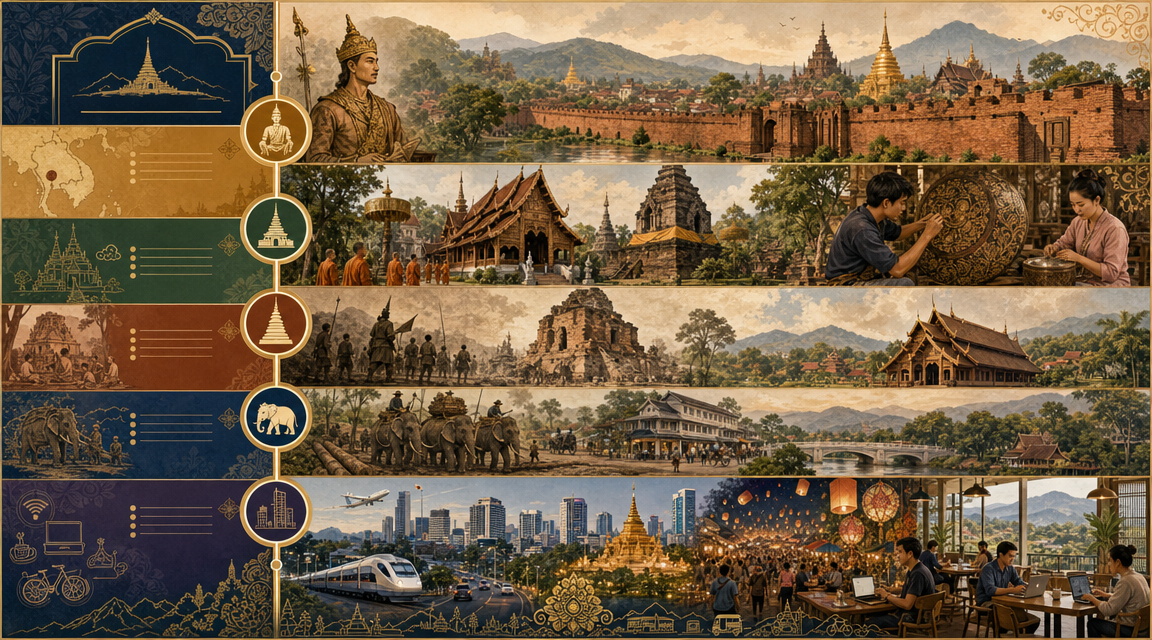
Chiang Mai, founded in 1296, has transformed from a strategic military outpost and ancient capital of the Lanna Kingdom into a bustling modern city known for its rich culture and vibrant arts scene.
Why It Matters
Understanding the history of Chiang Mai is essential for travelers seeking to appreciate its unique culture, architecture, and traditions. The city's past shapes its present and provides insights into the local customs and festivals that attract millions of visitors each year.
Detailed Explanation
Origins of Chiang Mai
Chiang Mai was established in 1296 by King Mengrai as the capital of the Lanna Kingdom. The city was strategically located along trade routes, making it a vital hub for commerce. Its name, which translates to "New City," reflects its role as a center for the Lanna culture, which flourished during the medieval period.
Architectural Heritage
The architecture of Chiang Mai is a beautiful blend of traditional Lanna styles and influences from neighboring countries. The city’s temples, such as Wat Phra Singh and Wat Chedi Luang, showcase intricate designs and are rich in history. Many structures date back centuries and serve as a testament to the city’s artistic heritage.
Colonial Era and Modernization
During the 19th century, Chiang Mai experienced significant changes with the arrival of the British and the integration of Western ideas. The city became part of Thailand in 1932, leading to rapid modernization. Today, while it retains its historical charm, it has also embraced contemporary developments, making it a vibrant city that balances tradition and modernity.
Cultural Significance Today
Today, Chiang Mai is not just a historical site but also a cultural epicenter. It hosts numerous festivals, like the Yi Peng Lantern Festival and the Songkran Water Festival, which attract both locals and tourists. The city also serves as a gateway to Northern Thailand’s natural beauty, with opportunities for trekking, exploring waterfalls, and visiting hill tribes.
Tourism and Preservation
As tourism continues to grow, efforts to preserve Chiang Mai’s cultural heritage are more critical than ever. Initiatives to protect historic sites and promote sustainable tourism are underway, ensuring that future generations can enjoy the city’s unique history and vibrant culture. Travelers are encouraged to engage respectfully with local customs and contribute positively to this beautiful city.
Related Reading
For more insights into Chiang Mai’s culture and attractions, check out our other articles on the best things to do in Chiang Mai, local festivals, and traditional Lanna cuisine.